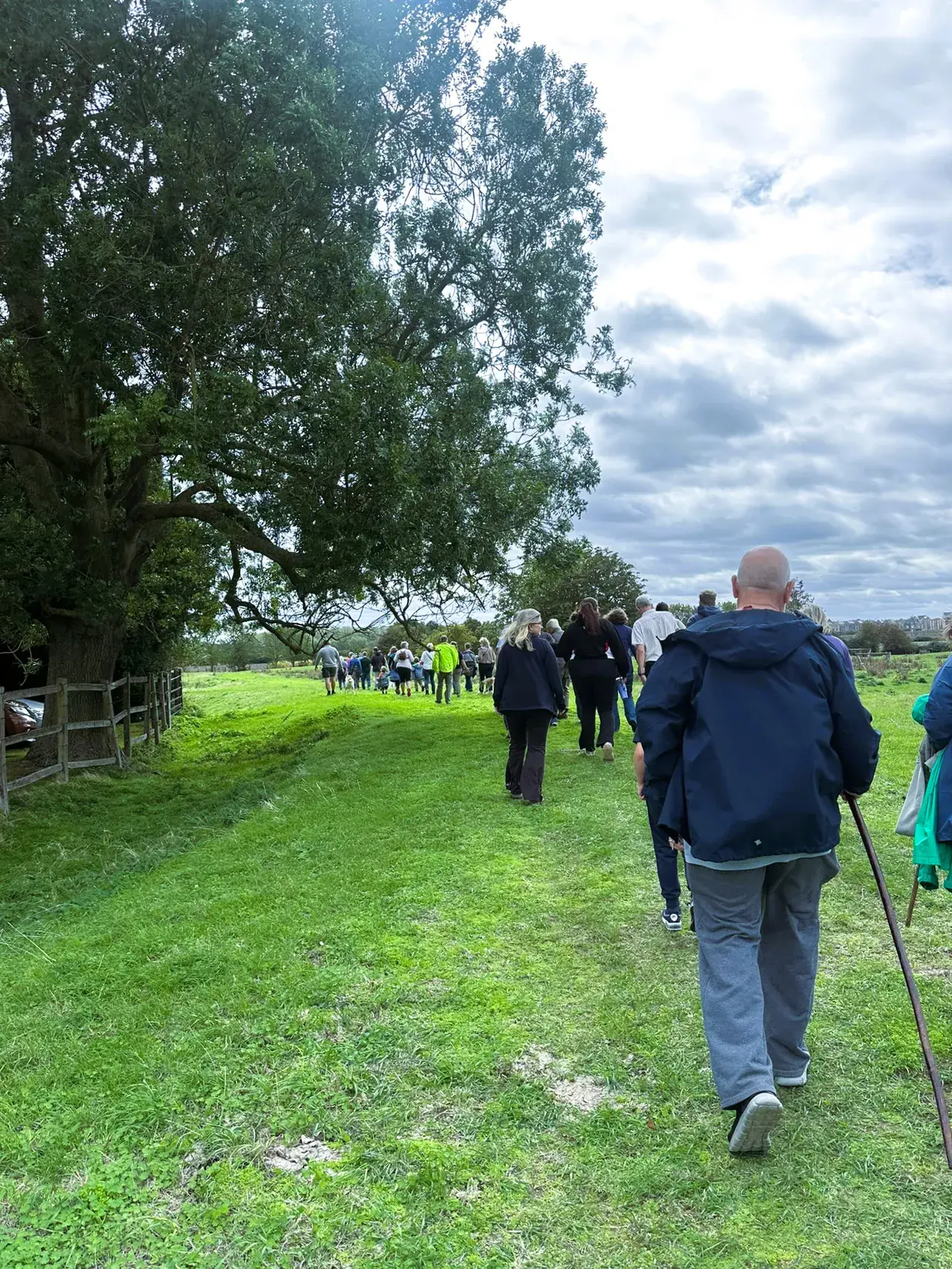
Last weekend, over 55 locals joined a guided journey through Waterbeach to explore the area’s rich historical tapestry and discover how the village’s past is helping shape its future and the new town development. The walk included access to areas not currently accessible to the public, which in time will be opened up to recreate the historic Causeway connection between Waterbeach Abbey and Denny Abbey.
Beginning at Waterbeach Village Green, Reverend Sarah Newns, Pioneer Minister at St John’s Church, welcomed an initial group of around 20 walkers with a reflection on the spiritual and social significance of pilgrimage walks and the importance of connecting people and places throughout history.
The Heritage Walk took in several key historical sites, each offering an insight into different periods in the area’s past, with additional walkers joining along the route.
From the Village Green, participants headed to Waterbeach Military Heritage Museum where they had an opportunity to have a look around and hear about the former barracks and airfield from David Higgins, one of the Museum Trustees.
The walk then resumed with Caroline Ward, Community Development Lead for Waterbeach, explaining how the historic Causeway to Denny Abbey is being incorporated into the active travel plans and sustainable transport links for the new town. She also explained the street naming strategy and how historic connections are resonating through the new development.
At the town square in the first phase of the new development, Dorothy Druitt shared poignant family memories of Winfold Farm and the very short notice they were given by the Ministry of Defence to vacate the land when it was acquired to become a military base during World War II.
The Heritage Walk also took in Soldiers Hill, an ancient earthwork attributed to the Roman period, where Jane Williamson, Chair of Trustees for The Farmland Museum, talked about these significant local landmarks and their historic importance.
At Denny Abbey, Reverend Sarah Newns led a blessing before participants explored the Abbey grounds and gardens and then headed back to Brew and Basket in Waterbeach’s Sustainable Travel Hub for refreshments and an opportunity to discuss some of the highlights from their walk.
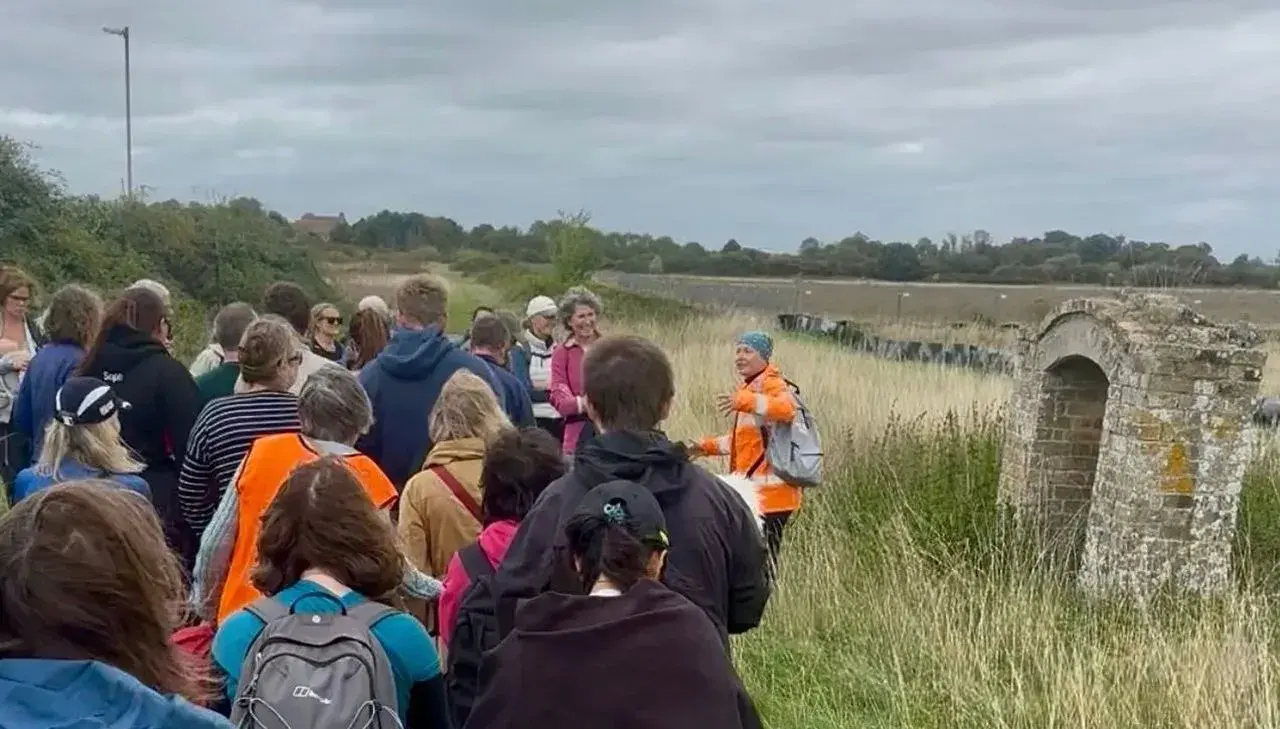 Jane Williamson said: “The Heritage Walk was a wonderful community event, and I saw people I haven’t seen for ages and met some new ones too. There’s was something really moving about going through the gate into the bit of causeway that has been inaccessible for so long. The walk along the path from the new town towards the Abbey is absolutely lovely, it’s almost like being in another world. It will be one of the places I pack in my memory and go back to in my mind when I want to escape the world.”
Reverend Sarah Newns added: “The walk showed the importance of connecting with neighbours and sharing experiences whether you have lived here a long time or are new to the area. The history of the land is fascinating, and this walk alone showed the layers of history around us, as well as how the next chapter of the parish is being written and shaped by the new development. It was great to see how the history is being reflected and celebrated within the New Town in a way that can continue to bring future generations together.”
Within the first phase of the development, the influence of medieval Denny Abbey is prominent. Gillyflower Lane is named after the peppercorn rent local farmers paid to the owners of Denny Abbey during the 12th century and the names of the Abbesses are reflected in some of the other street names.
The walk showed the importance of connecting with neighbours and sharing experiences